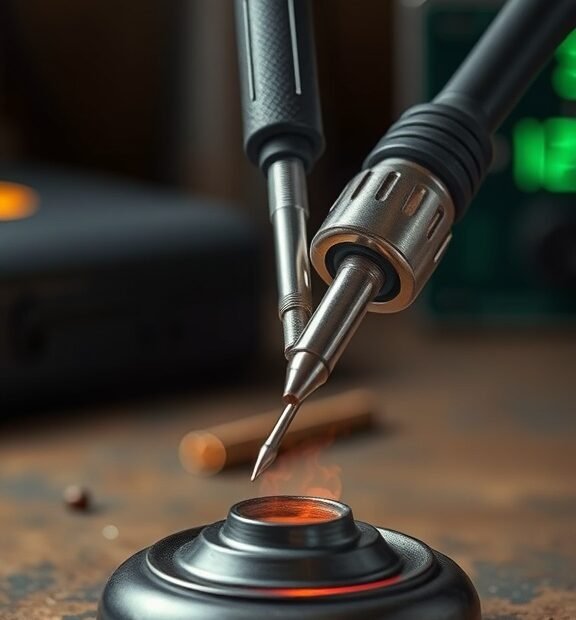
Optimal Temperature Settings for Different Soldering Applications
Using the right temperature when soldering is crucial for achieving clean, reliable connections. Many beginners wonder what temperature a soldering iron should be set at. The answer often varies based on the specific application you are working on. Below, you’ll find temperature recommendations for different soldering tasks, helping you make the best choice for your project.
General Soldering Applications
For most general-purpose soldering, setting your soldering iron to between 350°C and 400°C (662°F to 752°F) is recommended. This range is effective for most solder types, including lead-free solders and traditional lead-tin solders.
Factors to Consider
- Solder Composition: The melting point of the solder you are using can influence the required temperature. Lead-free solders typically need higher temperatures compared to lead-based solders.
- Component Sensitivity: Some components may be heat-sensitive. If you are working with delicate parts, it’s essential to lower the temperature to avoid damage.
Electronics and Circuit Boards
When soldering electronic components and circuit boards, it is best to work at a lower temperature. Setting your soldering iron to 320°C to 350°C (608°F to 662°F) is ideal. This temperature range provides enough heat to make solid connections without risking damage to sensitive electronic parts.
Soldering Stations | Easy 60 Day Return
Tips for Soldering Electronics
- Use Rosin Core Solder: This type of solder contains flux, which helps solder flow and adhere better, particularly at lower temperatures.
- Short Heating Time: Try to keep the heating time to a minimum. Prolonged exposure to heat can damage components.
Heavy-Duty Soldering
For heavy-duty soldering tasks, such as connecting larger wires or metal parts, you will need a higher temperature. Setting your soldering iron to around 400°C to 450°C (752°F to 842°F) will usually suffice. This range helps to melt the solder quickly and ensures a strong bond.
Common Use Cases
- Electrical repairs that involve thicker wires.
- Metal fabrication and jewelry making.
Lead-Free Soldering
If you are using lead-free solders, a temperature of 350°C to 400°C (662°F to 752°F) is generally appropriate, although some manufacturers may recommend slightly higher settings. Lead-free solders often require higher heat for effective melting and flow.
Soldering Stations | Easy 60 Day Return
Why Temperature Matters
Using the right temperature is fundamental in lead-free soldering because:
- Higher temperatures help achieve better wetting on surfaces, ensuring a more effective joint.
- Excessive heat can oxidize the solder, affecting its ability to bond, creating weak joints.
Surface-Mount Technology (SMT)
Soldering surface-mount components usually requires precise temperature control. Setting your soldering iron at around 260°C to 320°C (500°F to 608°F) is often optimal for this type of work. This range allows you to solder without overheating the components.
Soldering Stations | Easy 60 Day Return
Best Practices
- Utilize solder paste for surface mount components, as it adheres better at lower temperatures.
- Make use of a hot air rework station for even heating and less stress on components.
Final Thoughts
Finding the right temperature for your soldering iron is key to achieving professional results. By understanding the specific needs of your project, whether it’s general soldering, electronics, heavy-duty connections, or surface-mount applications, you’ll be better equipped to choose the optimal temperature settings. Remember to always prioritize quality and technique, as these will help you develop your skills and enable you to produce long-lasting connections in your soldering projects.
Common Mistakes When Choosing Soldering Iron Temperatures
Using a soldering iron can seem straightforward, but the right temperature setting is crucial to achieving desirable results. Many individuals make common mistakes when choosing soldering iron temperatures, which can lead to damaged components or ineffective joins. Understanding the ideal temperature for your specific application can make a big difference in your soldering success.
One of the most frequent errors occurs when beginners set the soldering iron to a temperature that is either too high or too low. This is a critical misstep because firing up your iron to the maximum temperature can easily melt and damage sensitive electronic components. Conversely, setting it too low may result in incomplete solder joints, causing poor electrical connections. The optimal temperature typically falls in the range of 350°C (662°F) to 400°C (752°F) for most electronic soldering tasks.
Soldering Stations | Easy 60 Day Return
Another significant mistake is neglecting the type of solder being used. Different solder materials have unique melting points. For example, lead-based solder generally melts around 183°C (361°F), while lead-free solder raises that requirement up to about 217°C (423°F). If you switch between different solder types without adjusting the temperature, you may encounter difficulties in making effective joints.
A lack of familiarity with your soldering equipment also spawns errors. For instance, many soldering iron models have built-in temperature controls, which may be easy to overlook. If you’re unaware of your specific model’s features, you might fail to utilize them effectively. This can lead to either overheating or underheating your soldering tasks. Always refer to your iron’s manual to comprehend its best operational practices.
Soldering Stations | Easy 60 Day Return
For those who frequently switch between projects, a common mistake is not recalibrating the temperature for different tasks. When soldering connects for delicate circuit boards and other sensitive electronics, lower temperatures are usually more appropriate. However, for larger connections or thicker wires, a higher setting may be needed. Make it a habit to assess the requirements of each project and adjust your soldering iron’s temperature accordingly.
Moreover, many people overlook the importance of allowing the soldering iron to reach the designated temperature before starting work. If you begin soldering before the iron is at the right temperature, it can result in prolonged heating times and damage. Wait until the indicator light (if available) shows that the iron is fully heated to ensure the solder flows smoothly and adheres correctly.
Soldering Stations | Easy 60 Day Return
Here’s a quick checklist of common temperatures based on different solder types:
- Lead-based Solder: 350°C (662°F)
- Lead-Free Solder: 400°C (752°F)
- Thicker Wires/Connections: 400°C (752°F)
- Delicate Components: 320°C (608°F)
Additionally, providing too much heat exposure is another frequent error made by novice solderers. Keeping the soldering iron on a joint for too long can cause the PCB board or component to warp or become damaged. Instead, aim for quick, precise applications. Ideally, you should engage the iron with the connection for around 2-3 seconds, allowing sufficient heat transfer without risking damage.
Soldering Stations | Easy 60 Day Return
Remember that soldering is an art that benefits from practice. Engaging in various projects will teach you about heat settings in real-time. Each time you solder, you gain insights into the appropriate temperatures for different scenarios, which can prevent future mistakes.
By being mindful of these common pitfalls, you can enhance your soldering skills and produce robust, reliable electrical connections. Take the time to adjust your soldering iron’s temperature correctly for your specific tasks, experiment, and refine your technique. You’ll notice a significant improvement in the quality of your soldering work, allowing you to tackle more complex projects with confidence.
Conclusion
Choosing the right temperature for your soldering iron is crucial for achieving quality results in your projects. Each soldering application demands specific temperature settings to ensure proper melting and bonding of materials. For instance, delicate electronics may require lower temperatures to prevent damage, while larger components could handle higher heat levels for efficient soldering. Understanding these optimal temperature settings allows you to work more effectively and produce stronger, cleaner solder joints.
Soldering Stations | Easy 60 Day Return
Common mistakes when selecting soldering iron temperatures can lead to unsatisfactory results. Overheating the solder can cause oxidation, making it difficult to create strong connections. Conversely, using a too-low temperature can result in ineffective soldering, where the solder does not flow properly. By being aware of these pitfalls, you can refine your technique and ensure your work is both efficient and safe.
Taking the time to adjust your soldering iron to the appropriate heat is an investment in skill and quality. Whether you’re a novice or an experienced hobbyist, paying attention to temperature settings can greatly influence the success of your soldering projects. Practicing with varied applications and temperature settings will naturally enhance your confidence and proficiency over time. Always remember, a well-set soldering iron not only improves your results but also helps you enjoy the process of crafting and repairing with precision. Keep experimenting, learn from your refinements, and watch as you become a more accomplished solderer.