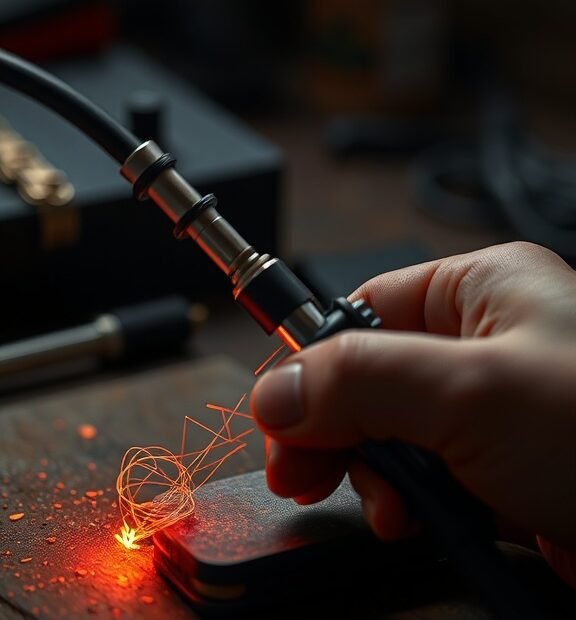
Safe Practices for Using a Soldering Iron
When working with a soldering iron, safety should be your top priority. A soldering iron operates at high temperatures and can cause serious burns or injuries if not used carefully. Here are key practices to ensure that you can use a soldering iron safely.
First and foremost, always wear the right protective gear. This includes safety goggles to protect your eyes from solder splashes and fumes, as well as heat-resistant gloves. These gloves will not only protect your hands from burns but also give you a better grip on your tools.
Before you even plug in your soldering iron, prepare your workspace. Make sure you have a clean, organized area free from clutter. It’s advisable to use a non-flammable surface like a soldering mat or a dedicated workbench. Having a designated workspace helps minimize the risk of accidental burns or stray soldering iron placements that could lead to fires.
Soldering Iron Kits & Accessories
Next, ensure that your soldering iron is in good working condition. Before use, check the power cord for any signs of wear or damage. A frayed cord can lead to electrical shocks. If you notice any issues, do not use the soldering iron until it is repaired or replaced.
When you begin soldering, keep the soldering iron in its stand whenever you are not actively using it. This prevents accidental contact with anything flammable and reduces the chance of burns to your skin or damage to other tools or materials on your workbench. Make it a habit to always return the iron to its stand after every use.
Soldering Iron Kits & Accessories
While soldering, be aware of your surroundings. Keep flammable materials, like paper and cloth, at a safe distance from your work area. Additionally, ensure proper ventilation as solder fumes can be harmful if inhaled. You might even consider using a fume extractor to help clear any toxic gases produced while soldering.
It’s also crucial to handle the soldering iron with care. When picking it up, always grab the handle firmly, and avoid touching any part of the iron other than the handle. Stay focused during the task; distractions can lead to accidents. If you need to step away, even for a moment, unplug your soldering iron.
Soldering Iron Kits & Accessories
Understanding the soldering techniques is equally important for safety. When soldering, do not apply excessive force. Let the heat from the iron do the work. If you find that the solder isn’t flowing properly, it might be due to an inadequate heat setting or the need for a cleaner tip. Regularly clean the soldering tip to ensure optimal performance.
Another critical aspect is to use the correct type of solder. Always choose solder designed for your specific project, whether it’s electronics or plumbing. Lead-free solder is widely recommended as it is less toxic and better for your health. If you do use standard solder which contains lead, wash your hands thoroughly after handling to avoid any potential ingestion.
Soldering Iron Kits & Accessories
Being aware of your tool’s temperature settings can also make a significant difference in safety. Most soldering irons come with adjustable temperature settings. Use a lower temperature if appropriate for your project; this reduces the risk of burns and damage to sensitive components.
Always have a first aid kit handy in your workspace. Accidents can happen even with the best precautions. If a burn does occur, cool the area with running water and seek medical attention if necessary. Having a first aid plan in place can help you respond swiftly to any incidents.
Soldering Iron Kits & Accessories
When you finish with your soldering project, make sure to turn off and unplug the soldering iron. Allow it to cool down completely before storing it away. Proper storage also means keeping your soldering iron and tools in a safe place, ideally out of reach of children and pets.
By implementing these safe practices in your soldering routine, you can significantly reduce risks and create a safer workspace. Remember, a little caution goes a long way in ensuring that your soldering experience is not only productive but also safe.
Essential Tools and Materials for Soldering Projects
Soldering is an essential skill in electronics, crafting, and fabrication. To start your projects smoothly, it’s crucial to have the right tools and materials. This ensures not only efficiency but also safety and quality in your work. Below, you will find an overview of the essential tools and materials you need for successful soldering projects.
Soldering Iron Kits & Accessories
Basic Tools Required for Soldering
Having the right tools can significantly impact your soldering experience. Here’s a list of fundamental tools you should gather:
- Soldering Iron: The heart of any soldering project. Choose a soldering iron with adjustable temperature settings. A wattage between 30-60 watts is typically sufficient for most electronics.
- Solder: Standard rosin-core solder is commonly used. Look for a diameter between 0.020” to 0.032” for most applications. Lead-free solder is a safer, more environmentally friendly choice.
- Soldering Iron Stand: This tool helps keep your soldering iron safely in place while you work. It should have a heat-resistant surface.
- Soldering Flux: This is a chemical cleaning agent that helps metals better bond when soldering. It can be found in various forms, including liquid, paste, or pen.
- Wire Cutters: These are crucial for trimming excess leads after soldering. Make sure they are sharp for clean cuts.
- Needlenose Pliers: Handy for holding small components in place or bending wires precisely.
- Desoldering Pump: This tool helps remove solder when mistakes happen. A vacuum pump is another option for easy desoldering.
Safety Gear for Soldering
Safety should always be a priority when soldering. Here are essential safety items to consider for every project:
Soldering Iron Kits & Accessories
- Safety Glasses: Protect your eyes from solder splashes and fumes. A pair of ANSI-approved glasses is ideal.
- Heat-Resistant Gloves: These gloves help protect your hands from burns, especially when handling hot tools.
- Fume Extractor: Solder fumes can be harmful. Using a fume extractor or working in a well-ventilated area is highly recommended.
Work Surface and Organizational Tools
A well-organized workspace is essential for efficient soldering. Consider using the following tools:
- Anti-Static Mat: This mat protects sensitive components from electrostatic discharge and provides a safe work surface.
- Tool Organizer: Use bins or drawers to keep your tools and components organized. This reduces time spent searching for items.
- Magnifying Glass or Inspection Lamp: A magnifier makes it easier to see small parts and solder joints, improving accuracy.
Common Materials for Soldering Projects
In addition to tools, you will need various materials for your soldering projects. Here are the main items to keep on hand:
Soldering Iron Kits & Accessories
- Electrical Components: Resistors, capacitors, IC chips, and transistors vary based on your specific project, so ensure you have a variety.
- Circuit Boards: Whether a proto-board or pre-designed PCB, having a good supply of circuit boards is essential for creating and testing circuits.
- Wires: Various gauges of wires are needed for connecting components. Stranded wire is flexible, while solid wire provides robust connections.
- Batteries: Depending on your projects, ensure you have the appropriate batteries or power supplies ready.
Preparing for your soldering projects involves gathering the right tools and materials, ensuring safety, and maintaining an organized workspace. With these essentials, you’ll be better equipped to tackle projects successfully and efficiently. Remember that practice makes perfect, so don’t hesitate to dive in and start soldering!
Conclusion
Using a soldering iron safely is crucial for both your safety and the success of your projects. By following safe practices, you can significantly reduce the risks involved with soldering. Always ensure that you’re working in a well-ventilated area, wear appropriate eye protection, and handle the soldering iron with care to avoid burns or accidents. Remember to keep your workspace organized to prevent any hazards and to be mindful of the hot components throughout your work.
Equally important is having the right tools and materials at your disposal. A well-equipped soldering station will not only make your work more efficient but will also enhance your ability to complete tasks safely. Essential tools, such as a quality soldering iron, solder, a sponge for cleaning, and helping hands, can make a huge difference. Investing in these materials can improve your soldering experience and ensure that you achieve high-quality results in your projects.
Soldering Iron Kits & Accessories
By combining safe practices with essential tools and materials, you create a productive and secure environment for all your soldering tasks. Embrace these guidelines to build your skills and complete your projects with confidence. Whether you are a hobbyist or a professional, being aware of safety measures and utilizing the right tools will lead to successful outcomes and fewer mishaps. Remember, safety should always come first, allowing your creativity to flourish without unnecessary risks.