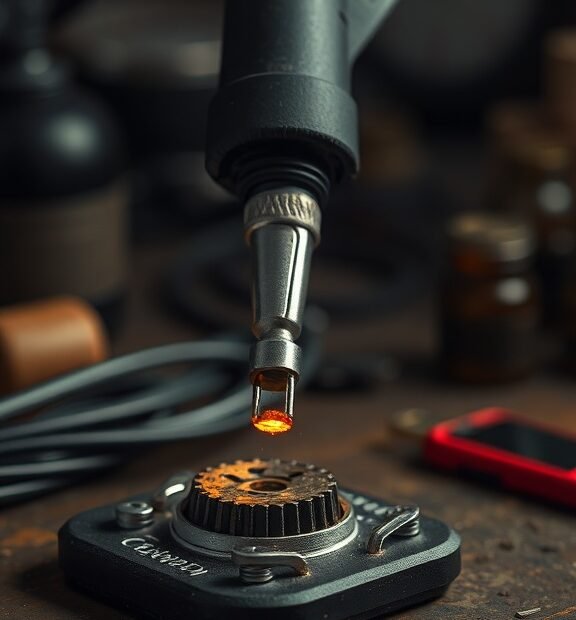
Effective Steps for Repairing a Soldering Iron
Soldering irons are essential tools for anyone working with electronics or DIY projects. But what do you do when your soldering iron isn’t working properly? Repairing a soldering iron can seem daunting, but with some basic knowledge and a few tools, you can get it back in working condition. Here is how to effectively repair a soldering iron.
Identify the Problem
The first step in repairing a soldering iron is to identify what’s wrong. There are several common issues that soldering irons can experience:
- No heat: The soldering iron does not heat up at all.
- Uneven heat: The soldering iron heats up but does not maintain a consistent temperature.
- Oxidized tip: The tip of the soldering iron appears discolored or dirty, which affects soldering performance.
- Loose connection: There may be a loose wire or connection inside the soldering iron.
Understanding the issue helps you target your repair efforts efficiently.
Soldering Iron Kits & Accessories
Gather Necessary Tools
Before you dive into the repair, gather the tools you’ll need. Having the right tools on hand makes the process smoother. Here’s a list you may find helpful:
- Multimeter for checking electrical connections
- Screwdriver set for opening the case
- Replacement soldering iron tip if necessary
- Wrench or pliers for tightening connections
- Soldering flux or cleaning solution for the tip
With these tools, you’re well-equipped to tackle the repair.
Soldering Iron Kits & Accessories
Start with the Basics
After identifying the problem and gathering tools, start with basic checks:
- Check the power source: Ensure the soldering iron is plugged in and the outlet is functioning. Try using a different outlet to rule out power issues.
- Inspect the cord: Look for any visible damage like frays or cuts in the cord. Replace the cord if it’s damaged.
- Test the switch: Use a multimeter to confirm that the switch is functioning properly. Replace the switch if it doesn’t work.
These initial steps can easily resolve common issues without delving deeper into the iron itself.
Soldering Iron Kits & Accessories
Address Internal Issues
If your soldering iron still doesn’t work after these checks, it might be time to look inside:
- Open the casing: Use a screwdriver to remove screws and open the soldering iron’s casing carefully.
- Inspect internal wiring: Look for loose or broken wires. If you find any, reconnect them securely or solder them if necessary.
- Check the heating element: The heating element could be faulty. If it’s damaged, you may need to replace it. This part is often the culprit behind heating issues.
- Replace the tip: If the tip is oxidized and despite cleaning it still does not perform well, replace it with a new one. Ensure it’s compatible with your model.
Taking care when handling the internal components can greatly improve the chances of a successful repair.
Soldering Iron Kits & Accessories
Reassemble and Test
Once you’ve addressed any internal issues, it’s time to put everything back together. Follow these steps:
- Carefully close the casing and secure it with screws.
- Plug in the soldering iron and allow it to heat up.
- Test it out on a piece of scrap metal or wire to see if it works effectively.
If it heats up and performs well, congratulations! You’ve successfully repaired your soldering iron.
Soldering Iron Kits & Accessories
Prevent Future Problems
To keep your soldering iron in good shape, follow these maintenance tips:
- Always clean the soldering tip after each use to prevent oxidation.
- Avoid leaving the soldering iron unattended while connected to power.
- Store the soldering iron in a safe place when not in use.
By maintaining your soldering iron properly, you can reduce the chances of needing repairs in the future.
Soldering Iron Kits & Accessories
Repairing a soldering iron is a straightforward task that can save you money and extend the life of your tool. With patience and the right approach, you can have your soldering iron working like new again.
Common Issues with Soldering Irons and How to Diagnose Them
Soldering irons are essential tools for DIY enthusiasts and professionals alike. However, like any tool, they can run into problems. Understanding common issues with soldering irons and how to diagnose them can save you time and money. You’ll be able to quickly identify problems and get your soldering iron working again in no time.
Poor Heat Transfer
One of the most common problems with soldering irons is poor heat transfer. When your soldering iron isn’t heating properly, it can lead to weak solder joints and frustration. Here are some things to check:
Soldering Iron Kits & Accessories
- Dirty Tip: Over time, soldering iron tips can accumulate oxidation and debris, which hinders heat transfer. Clean the tip with a damp sponge or brass wool.
- Wrong Temperature: Ensure your soldering iron is set to the correct temperature for the material you’re working with. Different solders have different melting points, typically between 350°F and 400°F (about 175°C to 200°C).
- Worn-Out Tip: If the tip is damaged or worn down, it may not conduct heat effectively. Consider replacing the tip if cleaning doesn’t resolve the issue.
No Heat at All
If your soldering iron isn’t heating up at all, it can be a real roadblock. Diagnosing this issue requires checking a few key components:
- Power Supply: Verify that the iron is plugged in and the outlet is functioning. Try using another outlet or testing the power cord for damage.
- Internal Connections: Open the soldering iron (if you’re comfortable doing so) and check for any burnt wires or connections. A break in the circuit will prevent the iron from heating.
- Faulty Element: The heating element may be burned out. If you’ve eliminated other issues, replacing the heating element could be necessary.
Overheating
On the flip side, if your soldering iron is overheating, it can be just as problematic. Overheating can lead to burnt components and poor solder joints. To diagnose overheating:
Soldering Iron Kits & Accessories
- Check the Temperature Setting: Ensure you haven’t set the temperature too high for the solder and components you’re using.
- Malfunctioning Thermostat: If the thermostat is faulty, it may not regulate the temperature correctly. Consider replacing it if this is the case.
- Ventilation: Make sure your work area is well-ventilated. Poor airflow can contribute to excessive heat build-up.
Difficulty Soldering
If you’re finding it challenging to solder effectively, it could be due to a number of reasons:
- Incompatible Solder: Ensure you’re using the right solder for your job. For instance, lead-free solder has a higher melting point.
- Incorrect Technique: Sometimes, user technique can lead to poor soldering. Ensure you are correctly preheating the components and applying solder efficiently.
- Tip Condition: A worn or dirty tip can struggle to melt solder effectively. Regular cleaning and replacing tips are good practices.
Static or Intermittent Performance
If your soldering iron heats up sometimes and not others, it can drive you crazy. This inconsistency can be caused by:
Soldering Iron Kits & Accessories
- Loose Connections: Check the power connection and internal wiring for any looseness. A broken contact can lead to intermittent heating.
- Temperature Fluctuation: If the internal components are failing, they might cause the temperature to fluctuate significantly.
- Component Wear: Older soldering irons might have aging components that can cause erratic performance. Consider investing in a newer model.
Being able to diagnose these common issues with soldering irons will help you maintain your tool more effectively. Remember that regular maintenance can prolong the life of your soldering iron and ensure it performs optimally. Keeping your workspace tidy and checking your tools regularly will help address problems before they impact your projects. With these tips, you’ll be able to tackle soldering iron problems like a pro!
Conclusion
Repairing a soldering iron can be a straightforward process if you follow the right steps and understand common issues. By first diagnosing the problems effectively, you can identify whether the issue lies in the power source, the heating element, or the soldering tip. Many common problems, such as a cold solder joint or a defective power cord, are often easy to spot and fix with a little patience and the right tools.
Once you’ve determined the specific issue, effective repair steps can be initiated. Whether it involves replacing parts, cleaning the soldering tip, or simply rewiring, addressing these issues promptly will keep your soldering iron functioning optimally. It’s also essential to perform regular maintenance, such as cleaning the tip after use and checking for any signs of wear and tear, to prolong its lifespan.
Soldering Iron Kits & Accessories
Remember, taking care of your tools not only saves you money but also enhances your overall soldering experience. A well-maintained soldering iron is crucial for achieving clean, precise solder joints, which are essential for all your electronic projects.
Armed with the right knowledge and techniques, you can restore your soldering iron to working condition and tackle your projects with confidence. Engaging in these repairs and understanding your tools more deeply not only improves your skills but also enhances your enjoyment of the craft.