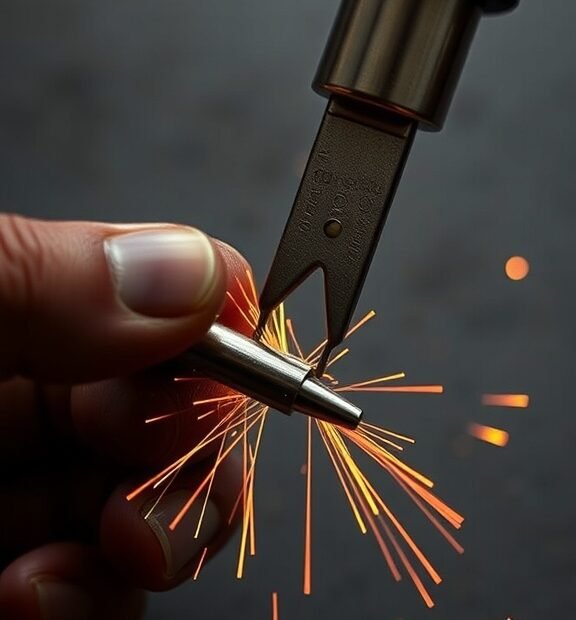
Key Factors to Consider When Choosing Soldering Iron Tips
When you’re diving into the world of soldering, choosing the right soldering iron tips is a crucial decision that can greatly affect your work. The tip you select influences the quality of your solder joints, the speed of your work, and even your overall satisfaction with the soldering process. Here are some key factors to consider when you’re on the lookout for the perfect soldering iron tip.
Tip Shape
The shape of the soldering iron tip plays a significant role in your soldering tasks. Here are a few common shapes:
- Conical Tips: Great for precision work. Ideal for small components and fine electronic circuits.
- Chisel Tips: Versatile for a variety of tasks. They provide better thermal conductivity and can cover larger areas.
- Bevel Tips: Useful for soldering in tight spaces. Great for accessing angled components.
Choosing the right shape depends on your project. For intricate work, go for conical tips. If you’re working on thicker materials, chisel tips might be your best bet.
Tip Size
The size of the soldering iron tip is another essential factor. Larger tips can transfer more heat and solder quickly, but they may not be suitable for delicate work. Here’s a quick breakdown:
- Small Tips: Best for precision soldering on small components and circuit boards.
- Medium Tips: Good all-around size for general soldering tasks.
- Large Tips: Ideal for heavy-duty work where larger solder needs to be applied.
Your choice of size impacts not only your ability to manipulate solder but also the quality of your work.
Material
The material of the soldering iron tip is also crucial. Most tips are made from copper, which offers excellent thermal conductivity. However, copper alone can wear out quickly, so many soldering tips come with plating that enhances durability. Keep an eye out for tips that are:
- Nickel-Plated: More durable and less prone to oxidization.
- Tin-Plated: Often cheaper but may wear out faster.
Choosing a high-quality, durable material will save you time and effort in the long run.
Thermal Conductivity
Thermal conductivity is a vital characteristic when selecting soldering iron tips. A tip that holds heat well will allow you to solder more efficiently. Good thermal conductivity helps ensure that the solder melts properly and adheres to components effectively. If a tip cools down too quickly, you might struggle to achieve a solid joint.
Compatibility
Before purchasing any soldering tip, check that it is compatible with your soldering iron model. Many soldering irons have specific tip sizes and shapes that are designed solely for them. Using the wrong type can lead to poor performance or even damage your soldering iron. Always refer to your soldering iron’s manual to find a recommended list of compatible tips.
Price and Longevity
While it may be tempting to go for the cheapest option, consider the long-term costs. Higher-priced tips often offer better thermal performance and last longer. Investing a little more up front can pay off as you won’t have to replace tips as frequently. Balance cost with quality to find tips that meet your budget but also promise durability.
Maintenance
Taking care of your soldering tips will extend their life significantly. Regularly cleaning and tinning your tips can prevent oxidation and improve heat transfer. Ensure you have the right cleaning supplies, like brass wool or sponge, and remember to always tin the tip when finished using it.
Selecting the right soldering iron tip involves understanding your specific needs, considering the shape, size, material, and compatibility with your soldering iron. Remember that a well-chosen tip not only enhances your soldering performance but also contributes to your overall satisfaction in your projects. Whether you are a hobbyist or a professional, making informed choices can lead to better soldering experiences and outcomes.
Common Types of Soldering Iron Tips and Their Uses
Soldering iron tips come in many shapes and sizes, each designed for specific tasks. Choosing the right tip can significantly affect the quality and efficiency of your soldering work. Here’s a look at some common types of soldering iron tips and their uses, helping you make an informed choice for your soldering projects.
Conical Tips
Conical tips have a pointed shape, resembling a cone. These tips are ideal for precision work, allowing you to solder in tight spaces. You can easily reach small pads on printed circuit boards (PCBs) or make precise solder joints without affecting nearby components. They are especially useful for delicate electronics.
Chisel Tips
Chisel tips are flat and wide, making them great for transferring heat quickly to larger areas. You can use them for soldering through-hole components and for making larger joints. They work well when you need to solder multiple connections at once since their surface area allows you to cover more ground quickly. The flat surface helps to provide better heat conductivity, which is crucial for heavier components.
Knife Tips
Knife tips are uniquely shaped for specific soldering tasks. Their thin edge is perfect for cutting through solder and making quick repairs. You can use these tips effectively in applications that require precision but also need some surface area for heat transfer. They are beneficial in working with tight spaces while providing enough warmth to melt solder smoothly.
Bevel Tips
Bevel tips feature a sloped edge that allows for smooth soldering across connections. When soldering large or irregular components, bevel tips can be advantageous as they distribute heat evenly. They are especially helpful in projects where you need to solder parts that can’t easily touch the tip directly. This versatility makes them suitable for both beginners and seasoned hobbyists.
Flat Tips
Flat tips are analogous to chisel tips, but usually wider. This style is perfect for creating larger solder joints and can be used for both surface mount devices and through-hole components. Due to their broadness, they are excellent for distributing heat evenly, making them useful for jobs that involve large connections. These tips work well for creating long-lasting joints.
Large vs. Small Tips
- Large Tips: Best for high-temperature applications, larger joints, and heavy components.
- Small Tips: Ideal for intricate electronics, micro-soldering tasks, and working with delicate components.
Choosing the Right Tip for Your Project
When selecting a soldering iron tip, consider both the project at hand and the components you will be working with. Take into account the following:
- Component Size: Smaller components require finer tips like conical or small chisel tips.
- Joint Size: Larger joints benefit from flat or large chisel tips.
- Workspace: Tight or complicated spaces may necessitate a conical or knife tip for better maneuverability.
Material and Temperature
The material of soldering iron tips can also affect performance. Copper tips are known for excellent heat conduction but can oxidize quickly. Titanium-coated tips, while more durable, may not conduct heat as well as copper. Regularly cleaning your tips can help maintain their effectiveness and prolong their lifespan. Make sure to choose the right temperature setting for your soldering tip and project. Higher temperatures are generally appropriate for heavy joints, while delicate work may require lower settings.
Maintenance of Soldering Tips
Proper maintenance of your soldering iron tips is essential for effective soldering. Always clean your tips during and after usage to remove oxidation and solder build-up. This can be done with a wet sponge or a brass tip cleaner. Regularly tinning your tips by applying a small amount of solder helps protect them and enhances heat conduction.
Understanding the common types of soldering iron tips and their uses can significantly improve your soldering projects. Whether you’re working with electronics, crafting, or general repairs, choosing the right tip will ensure better results and a more enjoyable experience.
Conclusion
Choosing the right soldering iron tip is crucial for achieving the best results in your soldering projects. By understanding the key factors, such as the size, shape, and material of the tips, you can make informed decisions that enhance your soldering experience. Remember, a finer tip is ideal for detailed work, while a broader one efficiently handles larger connections.
The common types of soldering iron tips—like chisel, conical, and screwdriver tips—each serve distinct purposes. The chisel tip is perfect for spreading heat across larger pads, whereas the conical tip allows for precision soldering on smaller components. Knowing these differences helps you pick the right tool for the job, ensuring that you can tackle any project with confidence.
As you explore the world of soldering, consider your project needs and your soldering technique. Are you working on delicate electronics or making larger connections? The right soldering iron tip can drastically influence your success and satisfaction. Pay attention to the material, as copper tips are excellent for quick heat transfer, while others may offer longevity with less maintenance.
With the right knowledge and tools in hand, you’re now ready to select the perfect soldering iron tip that matches your skills and project requirements. Happy soldering!