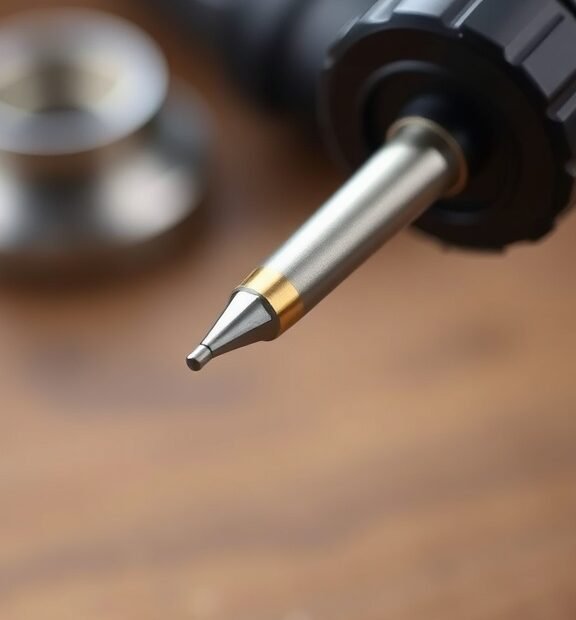
Effective Techniques for Measuring Soldering Iron Tip Temperature
If you’re working with soldering tasks, ensuring the right temperature of your soldering iron tip is crucial for achieving clean, strong joints. Measuring the soldering iron tip temperature accurately not only improves the quality of your work but also prolongs the lifespan of your equipment. Here are several effective techniques for measuring the temperature of your soldering iron tip.
Infrared Thermometer
An infrared thermometer is one of the easiest and most accurate methods to measure the soldering iron tip temperature without direct contact. Here’s how to use it:
- Turn on the infrared thermometer and allow it to calibrate.
- Point the thermometer at the soldering iron tip, ensuring you maintain the right distance as specified by the device’s guidelines.
- Pull the trigger to get an instant reading of the tip temperature.
This method works well because it provides readings almost immediately, allowing you to adjust the temperature on your soldering station as needed.
Soldering Iron with Built-in Thermometer
Many modern soldering irons come equipped with built-in temperature sensors and LED displays. This feature allows you to monitor the temperature in real-time. Here’s how to utilize this tool:
- Plug your soldering iron into a power source and turn it on.
- Observe the display to see the current temperature of the tip.
- Adjust the temperature settings as needed, based on the material you are working with.
The convenience of having an integrated thermometer simplifies your workflow and helps maintain precision.
Thermocouple Method
Using a thermocouple is another effective method for measuring the soldering iron tip temperature, particularly if you prefer a more hands-on approach. Follow these steps:
- Attach a thermocouple probe to the soldering iron tip using high-temperature adhesive or metallic tape.
- Connect the thermocouple to a digital thermometer or multimeter that reads temperature.
- Power on the soldering iron and allow it to heat up.
- Read the temperature from the multimeter or digital display while the soldering iron is active.
This method offers accuracy and can be used for various soldering tasks, especially if you need to work at specific temperatures.
Contact Thermometers
For more traditional measurements, contact thermometers are another option, although they require direct contact with the soldering iron tip.
- Select a contact thermometer that suits high-temperature readings.
- Carefully touch the probe to the soldering iron tip while it is heated.
- Wait for the reading to stabilize, then note the temperature.
While this method might disrupt your workflow a bit, it can be reliable for those who already own such equipment.
Data Loggers
If you’re involved in a production environment, data loggers can provide comprehensive monitoring. These devices can continuously record temperature data over time. Here’s how:
- Connect a data logger compatible with thermocouples and place the sensor on the soldering iron tip.
- Set up the device to log temperature readings and to record over a predetermined period.
- Review the data analysis afterward to evaluate the soldering process.
Data loggers are particularly useful for quality control, making them essential in settings where adherence to specific temperature standards is critical.
Measuring the temperature of your soldering iron tip is essential for achieving optimum soldering results. Whether you choose an infrared thermometer, a built-in thermometer, a thermocouple, a contact thermometer, or a data logger, each method provides its unique set of advantages. By implementing these techniques, you can enhance your soldering process, ensuring a strong bond while avoiding damage to sensitive components. Remember that consistent monitoring can significantly impact the quality of your work, so choose the method that best fits your needs and project requirements.
The Importance of Accurate Temperature Measurement in Soldering Applications
In soldering applications, achieving the right temperature is crucial for successful soldering joints. An accurate temperature measurement can dramatically affect the quality of your work. When you consider that both the components and the solder itself have specific temperature thresholds for effective melting and bonding, it becomes clear that mastering this skill is vital.
A common pitfall is the frequent use of incorrect temperature settings. Too low a temperature can prevent the solder from melting properly, leading to weak or incomplete connections. Conversely, excessive heat can damage components and lead to solder joint failure or even ruin expensive circuit boards. Therefore, knowing how to measure soldering iron tip temperature accurately cannot be overstated.
Why does the temperature of the soldering iron tip matter? Understanding the significance of this measurement goes beyond just the act of soldering. It touches on multiple facets of electronics work, including:
- Component Longevity: High temperatures can degrade sensitive electronic components over time, causing premature failure.
- Joint Integrity: Proper temperature ensures a solid bond, critical for the reliability of the device.
- Efficiency: Accurate temperature can speed up soldering time, improving overall workflow.
- Quality Control: Consistent temperature management leads to fewer defects, which is essential in industries like manufacturing.
Now that we understand why precise temperature measurement is vital, let’s break down how to effectively measure the temperature of your soldering iron tip. Here are some methods you might find useful:
Utilize a Thermocouple
A thermocouple is a device that can accurately measure the temperature of your soldering iron tip. It consists of two different metals joined together. When they are heated, they generate a voltage that correlates to temperature. To use a thermocouple:
- Attach the thermocouple to the soldering iron tip.
- Turn on the soldering iron and allow it to heat up.
- Read the temperature displayed on the connected thermometer.
Infrared Temperature Gun
An infrared temperature gun is excellent for quickly checking the tip’s temperature without making contact. However, keep the following points in mind:
- Ensure it’s calibrated properly for accurate readings.
- Take measurements without being too close to avoid heat distortion.
- Understand that infrared guns can give readings based on surface temperatures, which may not reflect true soldering temperatures.
Digital Multimeter with Temperature Probes
If you already own a digital multimeter, consider investing in temperature probes. These can be easily attached and are generally accurate. Here’s how to use them:
- Connect the temperature probe to your multimeter.
- Touch the probe to the tip of the soldering iron.
- Read the temperature displayed on the multimeter.
Maintaining an accurate temperature is not just a one-time setup. The soldering iron tip can wear out, leading to fluctuating temperatures. Regularly check the temperature for consistent performance. This is especially important for professional environments where quality assurance is paramount.
It’s also crucial to be aware of the thermal characteristics of different solder and components. For instance, lead-free solder typically requires higher temperatures compared to traditional leaded solder. Knowing these differences helps you to choose the right settings and ultimately results in better solder joint quality.
Beyond simply measuring, understanding how to adjust your equipment based on measurements is part of mastering the craft. Many advanced soldering irons come with adjustable temperatures, allowing you to make real-time changes. Familiarize yourself with these settings to provide excellent results across various projects.
Accurate measurement of your soldering iron tip temperature is a fundamental skill in soldering applications. By using tools like thermocouples, infrared guns, or digital multimeters, you can ensure optimal soldering conditions. Taking the time to check and adjust your soldering temperatures not only improves the quality and reliability of your work but also enhances your overall skills in soldering. Remember, a well-measured solder joint today helps secure functionality tomorrow!
Conclusion
Measuring the temperature of your soldering iron tip is crucial for achieving high-quality soldering results. By employing effective techniques, such as using temperature measurement tools like thermocouples or infrared thermometers, you can ensure your soldering iron is operating at optimal temperatures. This not only enhances the quality of your connections but also reduces the risk of damaging components and prevents issues such as cold solder joints.
Accurate temperature measurement plays a key role in various soldering applications. Each solder type has a specific melting point, and using an iron that is too hot can easily lead to oxidation or component damage. Conversely, an iron that’s not hot enough can cause the solder to ball up or not flow properly, leading to unreliable joints. Understanding the importance of temperature in your soldering process is essential for both hobbyists and professionals alike.
Temperature measurement into your soldering routine not only improves your skills but also fosters confidence in your work. Reliable connections are fundamental in electronics, and precise temperature control is the backbone of successful soldering. Embracing these measurement techniques can significantly enhance your projects, ensuring you achieve optimal results every time. Whether you’re working on intricate circuits or larger projects, measuring soldering iron tip temperature is a practice that pays off in terms of quality, durability, and overall performance. Don’t underestimate the power of precision in your soldering endeavors—investing in proper temperature measurement tools will elevate your craft to the next level.