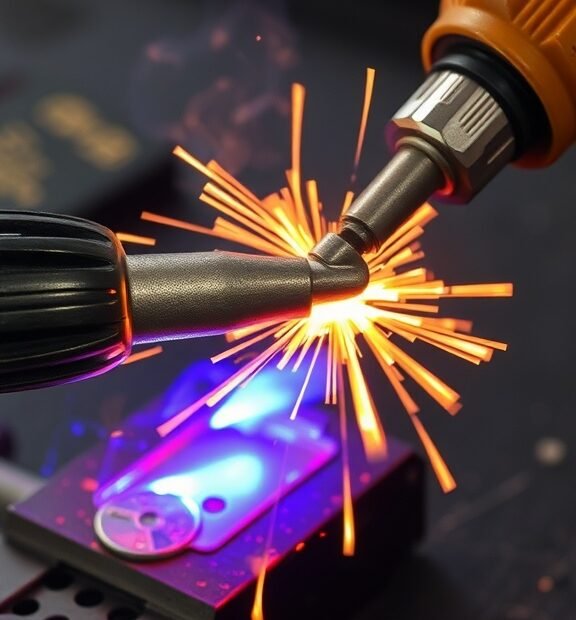
Can a soldering iron melt metal effectively in various applications?
Many people wonder if a soldering iron can melt metal effectively in various applications. Understanding this tool’s capabilities can help you in a range of projects, from electronics to jewelry making.
A soldering iron primarily joins electronic components together by melting solder, a metal alloy that typically includes tin and lead or tin and copper. The solder melts at a relatively low temperature, around 180-200 degrees Celsius (356-392 degrees Fahrenheit). This temperature is generally not high enough to melt most types of metals you might encounter in various projects.
So, can a soldering iron melt metal? The answer is, it depends on the type of metal and the applications you are considering. Here are some common scenarios:
Soldering Stations | Easy 60 Day Return
- Soldering Electronics: In electronics, a soldering iron is perfect for melting solder onto components. The solder fills the gaps between the components and creates a solid connection. The iron heats the solder, allowing it to flow into place before cooling and hardening.
- Repairing Jewelry: If you’re working with soft metals like silver or gold, a soldering iron can sometimes be effective. However, many jewelers prefer using a torch for these materials because they require a higher temperature to melt properly.
- Melting Lead: In applications where you need to melt lead, like in casting and fishing, a soldering iron can technically melt it, but it may take a long time and isn’t efficient. A dedicated melting pot or a small furnace is usually a better choice.
- Working with Copper: Copper has a melting point of about 1,984 degrees Fahrenheit (1,085 degrees Celsius), which is far beyond the capacity of most standard soldering irons. Therefore, a soldering iron is not practical for melting copper.
- Modified Soldering Irons: There are specialized soldering irons designed for higher temperatures. These can melt certain metals more effectively, but they are not widely used for general-purpose soldering.
When you’re using a soldering iron, remember its limitations. It’s an excellent tool for joining metal alloys at lower temperatures, but it’s not meant for melting larger chunks of metal or working with materials that require high heat. Attempting to melt metals with a soldering iron not designed for that purpose can damage the tool and pose safety risks.
Another important point is the wattage of the soldering iron. A standard soldering iron typically ranges from 15 to 60 watts. Higher-wattage models heat up faster and can maintain temperature better when soldering larger connections. If you’re planning to work on more demanding tasks, consider investing in a higher-wattage model.
Soldering Stations | Easy 60 Day Return
Safety is a priority when working with any soldering tools. Here are some safety tips to follow:
- Always work in a well-ventilated area. The fumes can be harmful.
- Wear safety goggles to protect your eyes from splashes or sparks.
- Keep a fire extinguisher nearby, especially when working with materials prone to ignition.
- Use caution when handling hot objects to prevent burns.
While a soldering iron can melt certain metals, it is not a universal solution for all types of metalworking. Its effectiveness primarily revolves around solder and soft metals. For projects requiring higher temperatures or larger metal pieces, consider using the appropriate tools for the job. Understanding how a soldering iron works and its limitations will help you make informed decisions that can improve your project outcomes and ensure your safety.
Soldering Stations | Easy 60 Day Return
Whether you are a hobbyist or a seasoned professional, knowing how to use your soldering iron effectively opens up a world of possibilities in various applications. Always choose the right tool for the specific task at hand, and you’ll achieve better results every time.
The differences between soldering and welding: Understanding metal joining methods
Soldering and welding are two distinct methods used for joining metal parts, each with its unique characteristics, applications, and benefits. Whether you’re a hobbyist working on DIY projects or a professional in metal fabrication, understanding the differences between these two techniques can help you choose the best method for your needs.
At the core of the differences between soldering and welding lies the temperatures used during the joining process as well as the materials involved. Below are key aspects that separate the two methods:
Soldering Stations | Easy 60 Day Return
Temperature Requirements
The most significant distinction lies in the melting points of the materials involved. Soldering typically occurs at lower temperatures, usually ranging from 180°C to 450°C (356°F to 842°F). This method uses a filler metal—commonly lead-tin solder—that melts and flows into the joint, creating a bond as it cools.
In contrast, welding requires significantly higher temperatures, often exceeding 1,300°C (2,372°F) depending on the materials being joined. Welding melts the base metals themselves, allowing them to fuse together upon cooling. This creates a stronger and more durable joint compared to soldering.
Soldering Stations | Easy 60 Day Return
Types of Materials Used
Another difference in these joining methods lies in the metals they typically join:
- Soldering: Primarily used with softer metals such as copper, brass, and aluminum.
- Welding: Suitable for a broader range of metals, including steel, stainless steel, and even some non-metals like plastics.
Strength of the Joint
The strength of the joints produced by these methods varies widely. Soldered joints, while adequate for many applications, are generally not as strong as welded joints. For instance, a soldered wire connection in electronics will suffice for electrical conductivity, but it cannot withstand heavy loads or extreme conditions. On the other hand, welded joints can be incredibly resilient and are often used in construction, automotive, and manufacturing industries.
Soldering Stations | Easy 60 Day Return
Applications
Understanding the applications can also guide your choice:
- Soldering: Commonly used in electronics for circuit boards, plumbing repairs, and jewelry making.
- Welding: Typically employed in structural applications, heavy machinery, and automotive manufacturing.
Ease of Use
If you are new to metal joining, you may find soldering to be a more user-friendly option. Soldering tools are generally inexpensive and easy to learn to use effectively. It allows for precise work, which is especially useful when dealing with delicate electronics.
Soldering Stations | Easy 60 Day Return
Welding, on the other hand, often requires more skill and practice. The equipment can be more expensive, and safety precautions are essential because of the high temperatures involved. Proper training is usually recommended for those interested in welding.
Duration of Process
Another practical difference between the two techniques is the duration needed to complete the metal joining process. Soldering is relatively quick; once the solder melts and flows between metals, it cools rapidly, forming a bond in seconds. This speed makes soldering an attractive option for projects requiring quick assembly.
Soldering Stations | Easy 60 Day Return
Welding usually takes longer. The process can involve multiple steps, such as preparing the metal surfaces, preheating if necessary, welding, and allowing the joint to cool. The overall timeframe depends on the complexity of the project, but it is generally more time-consuming than soldering.
Cost Implications
The costs vary for both soldering and welding. Generally, soldering requires less expensive equipment and materials, making it a more budget-friendly option for quick projects or small scale production.
Soldering Stations | Easy 60 Day Return
Conversely, welding equipment is typically more costly. However, the durability and strength of the weld often justify the investment, especially when considering long-term needs.
Understanding the differences between soldering and welding empowers you to make informed choices about the best technique to use in your projects. Whether you require the precise touch of soldering for electronics or the robust integrity provided by welding for structural projects, knowing these differences will enhance your metal joining outcomes.
Conclusion
Soldering irons are versatile tools used mainly for joining electronics and crafting projects, and while they possess the capability to melt metal, their effectiveness greatly depends on the specific application. A soldering iron generates high temperatures sufficient for melting solder—typically a tin-lead alloy or lead-free alternatives. However, it’s important to note that a soldering iron is not designed to handle larger metal pieces or heavy-duty applications like those addressed by welding.
Soldering Stations | Easy 60 Day Return
Understanding the difference between soldering and welding is crucial. Soldering is often utilized for delicate connections, such as in electronics, where precision and control are key. Welding, on the other hand, is ideal for thicker metals and provides a more robust bond, often used in construction and heavy machinery. Each technique serves its purpose effectively, depending on the requirements of the job.
If your project involves soldering circuit boards or smaller metal parts, a soldering iron will serve you well. However, if your task requires joining thicker materials, consider using welding techniques for a stronger, more durable finish. By understanding the strengths and limitations of each metal joining method, you can choose the right tool for your specific needs. This not only enhances your project’s success but also helps you achieve the best results in your metalworking endeavors. Whether you’re a hobbyist or a professional, knowing when and how to use a soldering iron versus a welder can make a significant difference in your work.